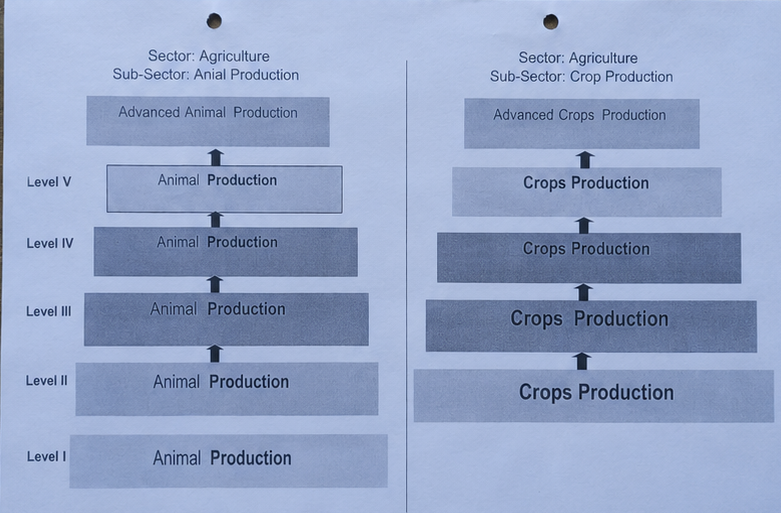
Introduction Ethiopia has embarked on a process of reforming its TVET-System. Within the policies and strategies of the Ethiopian Government, technology transformation - by using international standards and international best practices as the basis, and, adopting, adapting, and verifying them in the Ethiopian context - is a pivotal element. TVET is given an important role about technology transfer. The new paradigm in the outcome-based TVET system is the orientation at the current and anticipated future demand of the economy and the labor market. The Ethiopia Occupational Standards (EOS) is the core element of the Ethiopian National TVET-Strategy and an important factor within the context of the National TVET- Qualification Framework (NTQF). They are national Ethiopian standards, which define the occupational requirements and expected outcome related to a specific occupation without taking TVET delivery into account. This document details the mandatory format, sequencing, wording, and layout for the Ethiopia Occupational Standard which is comprised of Units of Competence. A Unit Title describes a distinct work activity. It is documented in a standard format that comprises: Occupational title and NTQF level Unit title Unit code Unit descriptor Elements and Performance Criteria Variables and Range Evidence guide Together all the parts of a Unit Title guide the assessor in determining whether the candidate is competent. The ensuing sections of this EOS document comprise a description of the occupation with all the key components of a Unit Title chart with an overview of all Units of Competence for the respective level including the Unit Codes and the Unit Titles contents of each Unit Title(competence standard) An occupational map providing the technical and vocational education and training (TVET) providers with information and important requirements to consider when designing training programs for this standard and the individual, a career path
Agriculture Department
April 28, 2026
0 views